Key facts
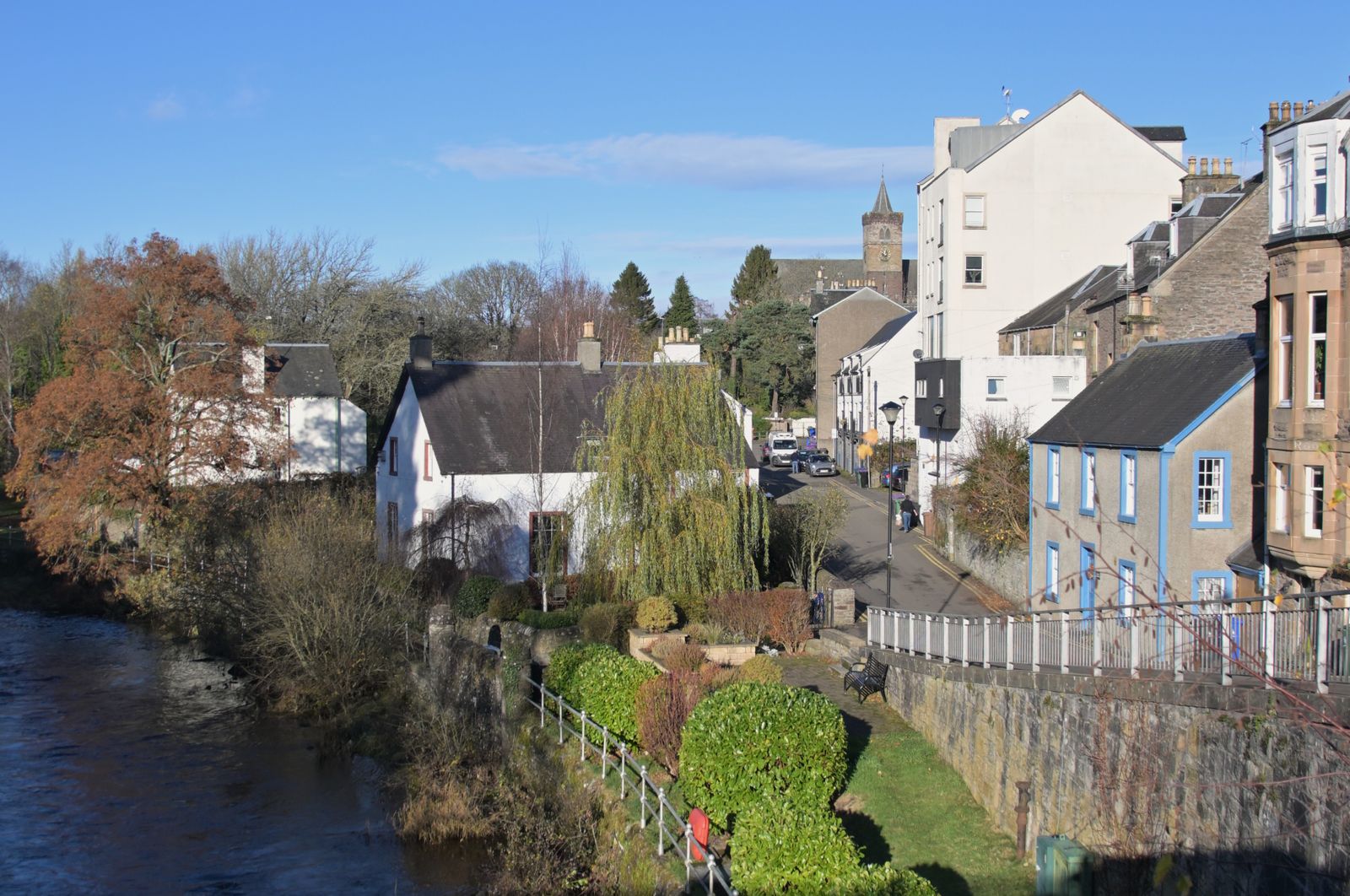
- 1Perth is known as the gateway to the Highlands, with a mix of urban and rural housing.
- 2The city has many Victorian and Edwardian villas with slate roofs.
- 3Rural Perthshire includes off-gas properties heated by oil or LPG.
- 4Perth sits near the boundary between SP Energy Networks (SPEN) and SSE Networks (SSEN).
- 5Systems up to 3.68kW are notified under G98; larger systems need G99 approval from the relevant operator.
- 6Mature trees in established Perth suburbs can cast shade that affects solar output.
- 7Interest-free credit up to £30,000, subject to status.
Last updated: 28 October 2026
What types of homes in Perth suit solar?
Perth\'s housing ranges from Victorian and Edwardian villas near the city centre to modern estates on the outskirts, and rural farmhouses and cottages in surrounding Perthshire. The Victorian villas typically have generous slate roofs with good orientation, though mature trees in established suburbs like Bridgend and Kinnoull can cast shade that affects output.
Modern estates are straightforward for solar with standard tile roofs. Rural Perthshire properties often have ample roof space or land for ground-mounted arrays, but may face access considerations and longer G99 timelines if they fall on the SSEN side of the DNO boundary. A survey identifies the best approach for your specific property.
How does the SPEN-SSEN boundary affect Perth installations?
Perth sits near the boundary between SP Energy Networks (SPEN) and SSE Networks (SSEN), so the distribution network operator for your home depends on your exact location. Properties towards the city and south tend to fall under SPEN, while rural Highland Perthshire may fall under SSEN. This matters because G99 timelines differ — SPEN typically processes in four to six weeks, SSEN in six to eight weeks.
We confirm which operator serves your address at survey stage and handle the G98 notification or G99 application. Most domestic solar systems fall under G98 and need only a post-installation notification, but larger systems or those with a battery above the 3.68kW threshold need prior approval.
Can heat pumps work for rural Perthshire properties?
Rural properties in Highland Perthshire are often off the gas grid and heated by oil or LPG, which makes a heat pump a strong alternative. The switch starts with a room-by-room heat loss survey that checks whether your property can hold the lower flow temperatures a heat pump needs. Older stone properties may benefit from insulation upgrades, which the survey identifies honestly.
The survey also shows which radiators need upgrading and whether a hot water cylinder is required. Once the heat pump is commissioned, the oil tank or LPG bottles can usually be removed. Our heat pumps guide explains how the technology works across Scottish homes.
What about batteries for Perth homes?
A battery lets you store daytime solar or cheap off-peak electricity for the evening. In Perth houses this is usually simple — a wall-mounted unit in a garage or utility room. For rural Perthshire properties, a battery is particularly valuable during power outages, which can be more common in rural areas. If backup power matters to you, ask for it at the quote stage, as it changes the wiring.
Our battery storage guide explains how home batteries work with solar and smart tariffs, and a survey confirms whether a battery is a good match for how and when your household uses electricity.
What drives the cost of a Perth installation?
Villa vs rural cottage
City villas are usually straightforward; rural Perthshire homes may involve access and logistics.
Oil tank removal
Removing an old oil tank adds to the work when switching rural properties to a heat pump.
Slate and stone
Original slate may need repairs, and solid stone walls affect heat pump design differently.
Tree shading
Mature trees in established Perth suburbs can reduce output on some roof slopes.
Inverter and battery
A hybrid inverter now makes adding a battery later simpler but costs a little more upfront.
DNO boundary
SPEN and SSEN have different G99 timelines, affecting your project schedule.
How long does a Perth installation take?
For a straightforward Perth house, expect roughly four to eight weeks from survey to installation, depending on whether SPEN or SSEN serves your address and whether a G99 application is needed. The physical fit usually takes one to two days once scaffolding is up. Rural Highland Perthshire properties may take longer due to G99 timelines and access. Heat pump installations add time for any insulation or radiator upgrades.
To see the full list of areas we cover across Scotland, visit our areas covered page. For general questions about solar, batteries and heat pumps, our FAQ page has answers.
Common questions
Can I fit solar panels on a Victorian villa in Perth?
Yes. Perth has many Victorian and Edwardian villas with slate roofs that can suit solar, provided the roof is sound and suitably oriented. The main considerations are slate condition, shading from mature trees and whether the property is in a conservation area. A survey checks all of these before quoting.
Which network operator covers Perth?
Perth sits near the boundary between SP Energy Networks (SPEN) and SSE Networks (SSEN), so the operator depends on your exact location. Systems up to 3.68kW are notified under G98; larger systems need G99 approval. We confirm which operator serves your address at survey stage and handle the notification or application.
Are heat pumps suitable for rural properties around Perth?
Yes. Rural properties around Perth are often off the gas grid and heated by oil or LPG, which makes a heat pump a strong alternative. A heat loss survey checks insulation and radiator sizing. The oil tank can usually be removed once the switch is complete. We install through MCS-certified partners.
Does being the gateway to the Highlands affect installations in Perth?
Perth's position at the edge of the Highlands means a mix of urban and rural properties, and the DNO boundary between SPEN and SSEN runs nearby. Rural properties towards Highland Perthshire may face longer G99 timelines and access considerations. We assess your specific location at survey stage.
Can I add a battery to my solar panels in Perth?
Usually, yes. A battery can be AC-coupled to an existing inverter or fitted with a replacement hybrid inverter. The right option depends on the age of your current inverter and your fuse board. A survey confirms which route is simpler and better value for your home. Interest-free credit up to £30,000, subject to status.
Last updated: 28 October 2026 · Reviewed by the Scottish Energy Efficiency team