Key facts
- 1Inverness is the capital of the Highlands and a gateway to more remote rural areas.
- 2Many homes around Inverness are off the gas grid and heated by oil or LPG.
- 3Off-grid properties can benefit from solar plus battery storage with a backup generator.
- 4SSE Networks (SSEN) is the distribution network operator for the Inverness area.
- 5G99 applications to SSEN typically take six to eight weeks, longer in very remote areas.
- 6Rural access via single-track roads and winter weather can affect installation scheduling.
- 7Interest-free credit up to £30,000, subject to status.
Last updated: 28 October 2026
What types of homes around Inverness suit solar?
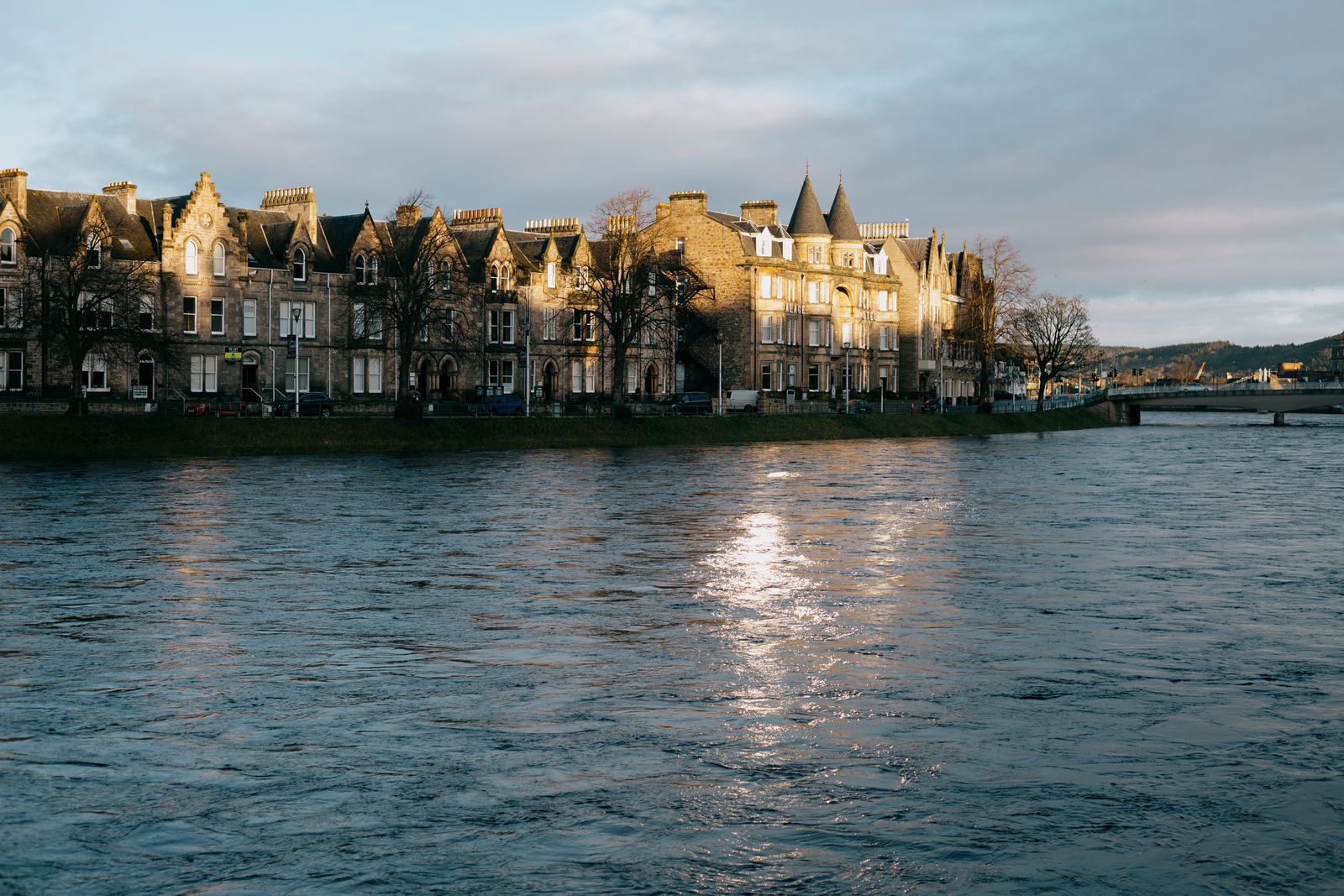
Inverness itself has a mix of Victorian sandstone buildings near the city centre and modern housing estates on the outskirts, both of which can suit rooftop solar. Further out, the picture changes: rural properties, crofts and farmhouses often have generous roof space or land for ground-mounted arrays, but may face access and grid capacity considerations.
For off-grid properties beyond the reach of mains electricity, solar paired with substantial battery storage and a backup generator can provide year-round power and reduce reliance on diesel. These systems are sized for seasonal variation, since Highland winter days are short. A survey assesses your usage profile and designs a system accordingly.
How does the oil and LPG to heat pump switch work near Inverness?
Many homes around Inverness are off the gas grid and heated by oil or LPG, which makes a heat pump a compelling alternative. The switch starts with a room-by-room heat loss survey that checks whether your property can hold the lower flow temperatures a heat pump needs. Rural Highland homes vary widely in insulation, so this survey is essential.
The survey also shows which radiators need upgrading and whether a hot water cylinder is required — most oil systems already use one. Once the heat pump is commissioned, the oil tank or LPG bottles can usually be removed, freeing up outdoor space. Our heat pumps guide covers the technology in detail.
Why do SSEN G99 timelines take longer around Inverness?
SSE Networks (SSEN) covers the entire Inverness and Highland region. G99 applications for solar systems over 3.68kW typically take six to eight weeks around Inverness, and can take longer in very remote areas due to network capacity constraints. This is longer than the Central Belt, where SPEN often processes in four to six weeks.
We submit G99 applications as soon as the system design is confirmed and factor the longer timeline into project planning. For off-grid properties, DNO timelines do not apply, but system design and equipment delivery take longer. We keep you informed throughout and give realistic dates at survey stage.
Can batteries help off-grid and rural Inverness homes?
Battery storage is especially valuable around Inverness. For grid-connected homes, a battery stores surplus solar or cheap off-peak electricity for the evening. For off-grid properties, battery storage is often the backbone of the whole system, sized to carry the home through periods of low solar generation with a backup generator as a last resort.
Rural grid-connected homes also benefit from batteries during power outages, which can be more common in Highland areas. If backup power matters to you, ask for it at the quote stage, as it changes the wiring. Our battery storage guide explains how home batteries work with solar and smart tariffs.
What drives the cost of an Inverness installation?
On-grid vs off-grid
Off-grid systems need larger batteries and a generator, while grid-connected homes can be smaller.
Oil tank removal
Removing an old oil tank and flue adds to the work when switching to a heat pump.
Rural access
Single-track roads, distance from Inverness and winter weather affect logistics and scheduling.
Seasonal sizing
Highland winter days are short, so off-grid systems are sized for the darkest months.
System size
Larger rural properties and farms need bigger systems, which cost more but serve greater demand.
SSEN DNO
G99 applications typically take six to eight weeks, longer than the Central Belt.
How long does an Inverness installation take?
For a grid-connected Inverness home, expect roughly six to ten weeks from survey to installation, reflecting longer SSEN G99 timelines. The physical fit usually takes one to two days, but rural access and weather can affect scheduling. Off-grid systems take longer to design and deliver due to equipment sizing. Heat pump installations add time for any insulation, radiator upgrades and oil tank removal. We give you a realistic timeline at survey stage.
To see the full list of areas we cover across Scotland, visit our areas covered page. For general questions about solar, batteries and heat pumps, our FAQ page has answers.
Common questions
Can off-grid homes near Inverness use solar and battery systems?
Yes. Off-grid properties around Inverness and the wider Highlands can benefit enormously from solar and battery systems to reduce reliance on diesel generators or expensive grid connection charges. A typical off-grid system pairs solar panels with substantial battery storage and a backup generator for winter. We design bespoke off-grid systems based on your usage and seasonal variation.
How long does SSEN G99 approval take around Inverness?
SSE Networks (SSEN) covers the Inverness area. G99 applications for solar systems over 3.68kW typically take six to eight weeks around Inverness, and can take longer in very remote areas due to network capacity constraints. We submit G99 applications as soon as the system design is confirmed and give you realistic timelines at survey stage.
Is a heat pump a good replacement for oil or LPG near Inverness?
Often, yes. Many homes around Inverness are off the gas grid and heated by oil or LPG, which makes a heat pump a strong alternative. A heat loss survey checks insulation and radiator sizing. The oil tank or LPG bottles can usually be removed once the switch is complete. We install through MCS-certified partners.
Do rural access issues affect installations near Inverness?
They can. Rural Highland properties outside settlement boundaries may have different access, logistics and grid capacity considerations. Single-track roads, distance from Inverness and winter weather can all affect scheduling. We assess access at survey stage and factor rural logistics honestly into project planning and timelines.
Do you cover the islands around Inverness and the Highlands?
Yes. We cover the wider Highlands and Islands, including properties that require ferry access. Island installations need careful logistics planning including ferry schedules and equipment transport. We factor island logistics into project timelines and give realistic completion dates. Call us to discuss your specific location.
Last updated: 28 October 2026 · Reviewed by the Scottish Energy Efficiency team