Key facts
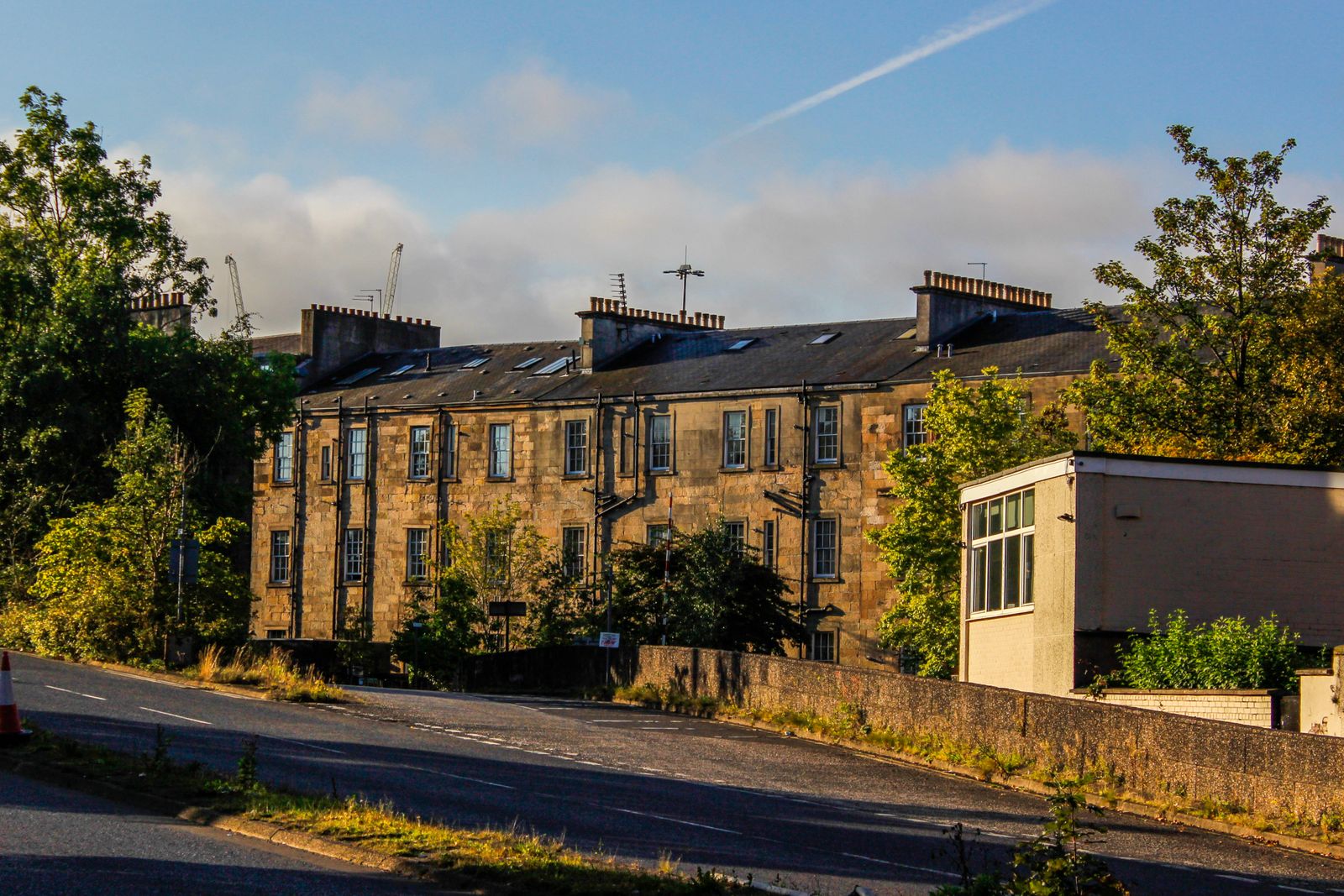
- 1Much of Glasgow's housing is red sandstone tenement flats built in the late 19th and early 20th century.
- 2The West End and Park District contain major conservation areas with extra planning controls.
- 3Glasgow tenements typically share a slate roof across multiple flats and a common close for access.
- 4SP Energy Networks (SPEN) is the distribution network operator for Glasgow.
- 5Solar systems up to 3.68kW are notified under G98; larger systems need G99 approval before installation.
- 6Solid sandstone walls have different insulation characteristics than modern cavity walls.
- 7Interest-free credit up to £30,000, subject to status.
Last updated: 28 October 2026
What types of homes in Glasgow suit solar?
Glasgow\'s housing stock is dominated by red sandstone tenements, particularly in areas like Hillhead, Partick, Shawlands and Dennistoun. These buildings have shared slate roofs, often in good condition but sometimes with original slates that need careful handling or replacement. Further out, Victorian and Edwardian villas in suburbs like Bearsden, Milngavie and Newton Mearns have generous, unshaded rooflines that are straightforward for solar.
Post-war estates and modern developments around the city tend to have concrete tile roofs that present no special challenges. For tenement flats, the key questions at survey are roof ownership, access through the close, and whether neighbouring properties cast shade across your section of the roof.
How do Glasgow conservation areas affect solar panels?
Glasgow has many conservation areas, with the West End, Park District and parts of the city centre being the most prominent. Inside these zones, roof-mounted solar usually requires planning permission rather than falling under permitted development. The planning officer considers visibility from the street, the roof slope the panels sit on, and whether flush in-roof systems would be more appropriate.
We check the conservation status of every Glasgow address at survey stage. Where an application is needed, we prepare the drawings and manage the process. In-roof panels, which sit flush with the slates rather than sitting on top, are often the preferred option on visible slopes in Glasgow\'s conservation areas.
Can heat pumps work in Glasgow sandstone tenements?
Air source heat pumps can suit some Glasgow tenements, particularly ground-floor flats with access to a back court or garden for the outdoor unit. However, solid sandstone walls have different insulation characteristics than modern cavity walls, and a heat loss survey is essential to check whether the flat can hold the lower flow temperatures a heat pump needs without major radiator upgrades.
Noise is a real consideration in flatted blocks, as the outdoor unit runs near neighbouring windows. We position units to respect permitted development noise limits and neighbour comfort. For detached Glasgow villas, heat pumps are generally more straightforward. Our heat pumps guide covers how the technology works across Scottish homes.
Do Glasgow industrial heritage roofs cause problems?
Some Glasgow properties, particularly converted warehouses and former industrial buildings in areas like the Merchant City and Finnieston, have unusual roof structures. These can include shallow-pitch roofs, multiple roof levels, and rooflights that limit where panels can sit. Slate condition on older roofs is always checked, as Glasgow slate can be original and brittle.
A survey identifies any structural or access issues before a quote is finalised. Where a roof needs repairs before panels go on, this is flagged honestly so there are no surprises during installation.
What drives the cost of a Glasgow installation?
Tenement vs house
Shared roofs and common close access add steps that a detached suburban villa does not face.
Conservation area
West End and Park District applications add time and may require flush in-roof panels.
Sandstone and slate
Original slate may need repairs, and sandstone walls affect heat pump design differently.
Shading from tenements
Dense tenement streets can cast shade across roofs at certain times of day.
Inverter and battery
A hybrid inverter now makes adding a battery later simpler but costs a little more upfront.
DNO notification
SPEN handles G98 notifications and G99 applications for systems above 3.68kW.
How long does a Glasgow installation take?
For a straightforward house outside a conservation area, expect roughly four to six weeks from survey to installation, with the physical fit taking one to two days once scaffolding is up. Inside a Glasgow conservation area, add around six to eight weeks for planning permission. Systems needing G99 approval from SPEN add further time. We provide a realistic timeline at survey stage.
To see the full list of areas we cover across Scotland, visit our areas covered page. For general questions about solar, batteries and heat pumps, our FAQ page has answers.
Common questions
Can I put solar panels on a Glasgow tenement roof?
Yes, but most Glasgow tenements share a roof across several flats, so you normally need written agreement from co-owners and possibly the factor. Access for scaffolding through a common close also needs planning. A survey checks roof ownership and whether your section of the roof is suitable and unshaded.
Do Glasgow conservation areas affect solar panel installation?
Yes. Glasgow has numerous conservation areas, particularly in the West End, Park District and parts of the city centre. Within these zones, planning permission is usually required for roof-mounted panels. We check the conservation status of your address during the survey and handle the planning application where one is needed.
Which network operator covers Glasgow?
Glasgow is served by SP Energy Networks (SPEN). Systems up to 3.68kW (16 amps) are notified after installation under G98. Larger systems require a G99 application submitted before work begins, which SPEN typically processes in around four to six weeks. We handle notification or application as part of your installation.
Are heat pumps suitable for Glasgow red sandstone tenements?
Heat pumps can work in some Glasgow tenements, but solid sandstone walls, shared ownership and limited outdoor space for the unit make them more complex than for detached homes. A heat loss survey checks insulation and radiator sizing. Ground-floor flats with a back court or garden are usually the best candidates.
Is a battery worth it for a Glasgow home?
A battery can be worthwhile if you have solar panels and use most of your electricity in the evening, or if you are on a time-of-use tariff. In tenement flats, finding a suitable ventilated location close to the consumer unit is the main challenge. A survey models whether a battery pays off for your usage. Interest-free credit up to £30,000, subject to status.
Last updated: 28 October 2026 · Reviewed by the Scottish Energy Efficiency team